
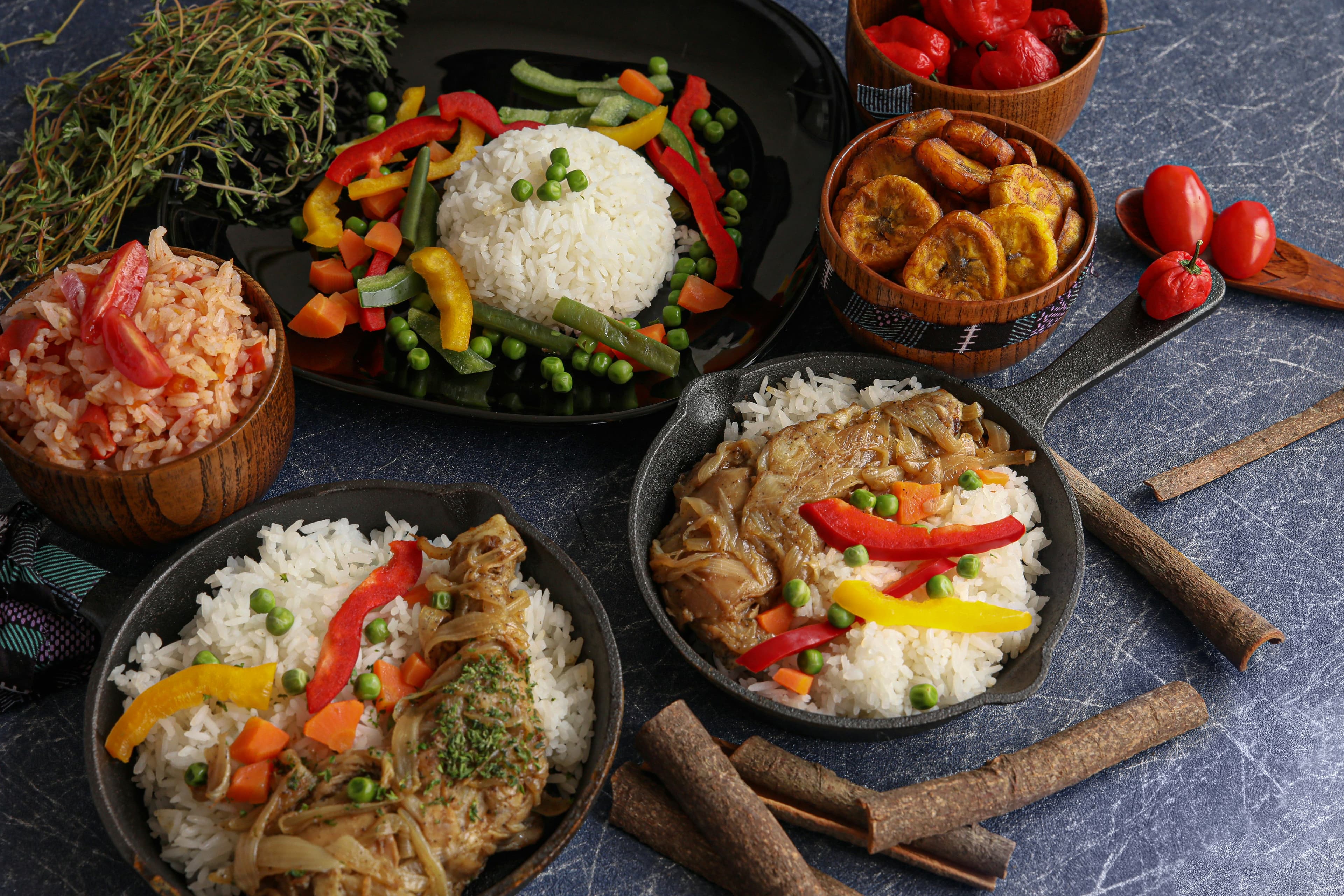
Madam Stopover's day starts at 5am. Not because an alarm tells her to - she has been waking at this time for years and her body has simply stopped needing one. By 5:30 she has the fire lit, the palm oil warming, and the first pot of stock on. By 7am, the smell has started its journey down the street. By 7:30am, the first customers are already at Ofejiro Stopover Resturant.
She knows many of them as the business has been there for over 20 years. She knows who likes extra pepper. She knows who is trying to eat less oil for health reasons. She knows who always orders for two even when they are alone, because they are taking food home to their mother. This is not hospitality training. This is years of caring - the kind you cannot teach and cannot fake.
"I don't write anything down because it's all here," she says, pressing one finger to her temple. "But sometimes I worry. What if I forget? What if it gets too busy?"
When the rush hits
Between 12pm and 3pm, Ofejiro Stopover becomes a different place entirely. Every table is taken. New customers are walking in while others are still eating. Orders are coming from every direction. And in the middle of all of it, Madam Stopover is trying to hold an entire restaurant in her head at once.
Here is how it works on a normal busy day. A customer sits down. One of her salesgirls takes the order, writes the items and the amount on a small piece of paper, and walks it across to Madam Stopover, who collects the payment. During a quiet afternoon, this works fine. During rush hour, it becomes something else entirely - slips arriving from two directions at once, some getting wet near the cooking area, some landing on the floor, some arriving after the customer has already eaten and is standing up to leave.
And then there is the deeper problem. When a salesperson writes NGN 1,500 on a slip, is that the correct price for what was served? Did she remember to add the extra protein? Did she account for the drink? During a rush, honest mistakes happen. But because the slip disappears the moment the payment is collected, there is no way to check. The money in the tin is what it is - and whether it matches what was actually sold, there is no way to know.
Who ordered the Egusi? Has Table 4 paid? That woman by the window - did she pay before she sat down or is she waiting for the bill? These questions pile up faster than they can be answered. Sometimes change is given incorrectly. Sometimes a table walks out not because they meant to leave without paying, but because in the chaos nobody was sure who was responsible for collecting. It happens. It costs her every time.
Two businesses, no system connecting them
What makes it harder is that Madam Ofejiro is not running one operation - she is running two simultaneously with nothing connecting them. The customers eating inside the restaurant are one world. The customers who call ahead, send someone to collect, or want food delivered are another world entirely. An order comes in by phone while she is in the middle of serving a full house. She tries to hold it in her head. Sometimes it works. Sometimes the customer arrives to find their food was not prepared because the message got lost somewhere between the phone call and the kitchen.
It is not carelessness. It is the inevitable result of trying to manage everything with memory, a notebook, and small pieces of paper while also cooking for 300 people.
What changed
Ofejiro Stopover is the first restaurant partnering with ChopQik - and the reason we built the platform the way we did. When we sat with Madam Stopover and asked what would actually help her, she did not ask for a fancy website. She asked for two things: to stop losing track during the rush, and to finally know her real numbers at the end of the month.
So that is where we started. Every table now has a small QR card. When a customer sits down, her salesperson no longer writes on paper - she opens the ChopQik screen, taps the items and the table number, and the order appears instantly on Madam Stopover's dashboard. The amount is automatic - no handwriting, no slips, no guessing. Madam sees exactly what was ordered, collects the payment, and taps paid. At any point during the rush she can look at one screen and know which tables have paid, which are still eating, and which orders are being prepared. The chaos does not disappear - but it becomes manageable.
The outside orders now live in the same place. A customer orders through ChopQik from across town. It joins the same queue on the same screen, labelled clearly as a delivery. One screen. Everything in it.
The notebook still exists - but now it has a version that works. Every market purchase she logs. Every debt to a supplier she tracks with a reminder before it is due. Every expense she records - the girls' wages, the gas, the equipment. At the end of the month, one screen shows her the number she has been trying to calculate for years: total earned, minus every naira spent, equals her real profit. The first time she saw it clearly laid out, she was quiet for a long moment.
"So that is what I actually made. All these years and I never knew the real number."
She still wakes at 5am. She still knows her regulars by their voices and their orders. Her food has not changed - and it never needed to. But now she also knows her numbers, her stock, her debts, and her best-selling dishes. That, she says, feels like finally having a proper business after all these years of running one.
Ofejiro Stopover is open every day in Benin City. You can find her - and order from her - right here on ChopQik.